

Title: Art and Craft Program for Offenders
Category: Offender Management
Version: 07
Implement Date: 21 September 2009
Application: Custodial Operations
Availability: Public
Authority
Appendices and Forms
Procedures
Policy
To provide for the contribution for sale to benefit nominated charities, display, and/or disposal of art/craft work produced by offenders.
This procedure sets out processes for dealing with offender art/craft work. Art/craft work documentation must be completed at the relevant corrective services facility in consultation and negotiation with the artist, the Activities Officer at the corrective services facility, the general manager of the facility and the Project Officer, Art and Craft Program for Offenders.
'Art and Craft Program for Offenders (ACPO)' refers to the program by which Queensland Corrective Services (QCS) assists offenders who have produced art/craft work in the display of the art/craft work. This program is managed by the Offender Intervention Services Directorate.
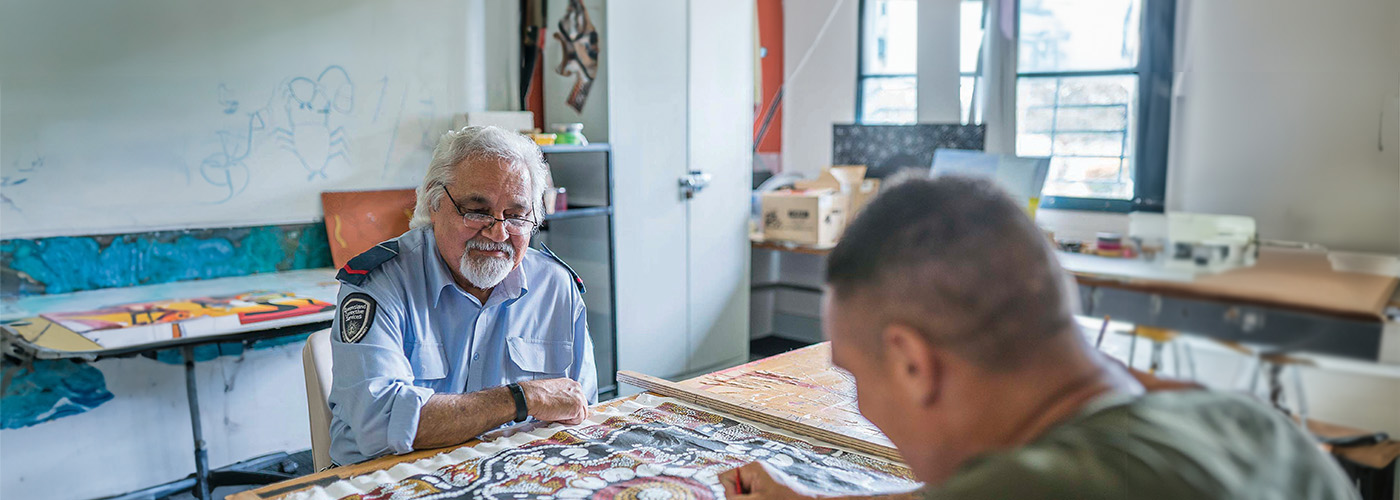
'Art/craft work' refers to those articles produced by offenders in a hobby, handicraft or art class, in an approved location or some other space set aside for offender art/craft work activities. It includes, but is not limited to, paintings, sculptures, pottery, glasswork, leatherwork, drawings, postcards, greeting cards. Art/craft work is usually hand-made, and its maker or designer intended it to be 'artistic' rather than purely functional.
'Activities Officer' refers to the person/s responsible for developing, managing and delivering cultural, recreational art, craft and hobby activities to offenders at the corrective services facility.
'Project Officer' refers to the officer responsible for coordinating the ACPO operated within the Offender Intervention Services Directorate.
'Inventory of Art/Craft Work' is a database for managing offender art/craft work submitted to QCS under the ACPO. A reconciliation of the art/craft work held in the database shall be undertaken at least annually.
While held in custody in a corrective services facility, the offender must not sell, give, give possession of, or otherwise dispose of art/craft work unless approved by the chief executive or delegate (CSA s 28A).
If the Public Trustee manages an offender's estate, prior written consent must be obtained before the offender can provide their art/craft work for display or otherwise part with its possession.
The copyright and intellectual property rights of art/craft work created by offenders remain with the offender, unless released by them through agreement.
Art/craft work is automatically protected by copyright when put in 'material form'. That is, in a form where it could be reproduced, by making a craft item, painting a picture, taking a picture or making an artwork in a digital form.
Copyright does not protect ideas, information, styles or techniques.
Moral rights relate to personal rights belonging to the creator of copyright works and cannot be transferred, assigned or sold.
The creator has the right to be attributed for their work, not to have their work falsely attributed and not to have their work treated in a derogatory way.
Any issues in relation to copyright, intellectual property and moral rights must be resolved prior to the art/craft work being subject to the ACPO.
When an offender completes art/craft work, details of the art/craft work must be recorded. An offender may choose to retain their art/craft work, refer procedure - Property of Offenders.
If approved by the general manager of the corrective services facility, offenders may retain their completed art/craft work in their cell. Refer to administrative form - Acknowledgement of Responsibility for Property.
If the Public Trustee does not manage an offender's estate, or if prior written consent has been obtained by the Public Trustee, and an offender exhibits art/craft work in a registered competition and is awarded a prize, the offender may receive the full benefit of that prize, provided it does not constitute a prohibited thing.
Refer Corrective Services Regulation 2006 s 20.
If the prize is not monetary (for example, art materials) the general manager of the corrective services facility must determine whether the prize is suitable for entry to the facility. Refer procedure - Property of Offenders.
In the circumstances where an offender is awarded a prize, they may elect to-
Where an offender's estate is being managed by the Public Trustee, if the prize is considered 'property' for the purposes of the PTA, then the Public Trustee should determine how the prize shall be managed. The Public Trustee may provide consent for the offender to otherwise deal with the prize.
Art/craft work may only be displayed if the offender has completed the administrative form - Agreement between the Offender Artist and Queensland Corrective Services. This applies to all forms of exhibitions including those within a correctional centre.
It is the responsibility of the general manager to ensure that art/craft work submitted for display does not contain material that-
At the conclusion of the exhibition/display the art/craft work will be returned to the offender unless the offender makes alternative arrangements as provided for in this procedure.
The general manager of the corrective services facility may authorise the display of offender art/craft work within public or general access areas of the facility using administrative form - Request for Approval - Local Exhibition/Project/Initiative.
The Project Officer, ACPO, can provide assistance, support and guidance to establish and manage local initiatives.
In the case of the display of art/craft work being an event/exhibition, advice regarding attendance, purpose and details of the exhibition must be provided prior to the event/exhibition to the Project Officer, ACPO as per appendix - Guidelines for the Organisation of an Exhibition.
The following applies to displayed art/craft work:
Exhibitions and displays
A request for exhibition of art/craft work, including participation in local community displays/exhibitions, must be made to the Executive Director, Offender Intervention Services, using administrative form - Request for Approval - Local Exhibition/Project/Initiative.
Exhibitions must be organised and coordinated through the Project Officer, ACPO.
The Project Officer, ACPO must provide advice about the exhibition to the Commissioner and the Director, Office of the Commissioner.
Internet and Intranet publishing
Art/craft work may be displayed for sale by electronic means on the QCS internet and intranet sites.
Government Departments and other Agencies
The display of art/craft work in the offices of other State Government departments and agencies is conditional upon the completion of an assessment as to the suitability of the proposed display area and terms for the safekeeping of art/craft work by the Project Officer, ACPO.
The Project Officer, ACPO, must arrange for administrative form - Agreement between Agencies for Displaying Offender Artwork/Craft Work to be signed by the other agency.
In the event of loss or damage and/or at the conclusion of the display period, an assessment must be conducted to determine the extent of any damage or loss. If the art/craft work were formally contributed to QCS for sale to benefit nominated charities, the appropriate costs for repairs will be recovered from the displaying agency (Refer section 11 of this procedure). If the offender did not formally agree to contribute the art/craft work for sale to benefit nominated charities, arrangements would need to be made for the offender to be compensated accordingly. These funds should be recovered by QCS from the displayer.
Limitation of liability - Art and Craft Program for Offenders
For art/craft work valued at greater than $500 and handled for display and exhibition by QCS under the ACPO, the State of Queensland (through Queensland Corrective Services) provides a maximum liability of $500 in circumstances where accidental damage and/or loss is sustained.
For art/craft work valued at less than $500 the liability is limited to the value of the repair.
A representative from Arts Queensland will liaise with QCS in valuing art/craft works that are contributed to QCS for sale to benefit nominated charities.
An offender may contribute their art/craft work to QCS for sale to benefit nominated charities.
An offender must sign administrative form - Agreement between the Offender Artist and Queensland Corrective Services before QCS is permitted to display and sell the art/craft work. These art/craft work products will be sold or auctioned by QCS in order to generate funds for charitable organizations nominated in the appendix - Nominated Charitable Organisations.
Before approving the contribution for sale, the general manager of a corrective services facility must ensure that the art/craft work does not contain material that is:
Following contribution of art/craft work to QCS for sale to benefit nominated charities, art/craft work may be sold by QCS through exhibitions, displays and online. All sales of contributed art/craft work to benefit nominated charities must be coordinated through the Project Officer, ACPO.
Arts Queensland will assist in assessing the art/craft work and provide QCS with a marketable value for the sale of art/craft work.
An employee of QCS or an engaged service provider may only buy contributed offender art/craft work -
Any failure to comply with the procedure may constitute a breach of the Code of Conduct. Refer procedure - Conflict/Declaration of Interest.
The monies from the sale of art/craft work must be deposited into a central QCS account and recorded in a general ledger account specifically created for this purpose.
All proceeds from the sale of offender art/craft work will be dispersed to nominated charities on an annual basis after administrative costs such as framing of paintings, bank fees/charges and freight/transport have been deducted from the balance.
Identification of nominated charities for receipt of proceeds from the sale of offender art/craft work may be done by -
Nominated charities will be approved by the Commissioner for Corrective Services in consultation with the Ethical Standards Branch and reviewed annually.
The Project Officer, ACPO will coordinate, and be responsible for, the day to day operations and maintenance of the fund. Finance and Acquisition Services will provide guidance and support on financial issues and expenditure from the fund.
Refer procedure - Community Engagement Processes
An offender may, with the approval of the chief executive or delegate:
Refer - CSA 2006 ss 28B, 28C and 28D
An offender may, with the approval of the general manager, hand out their art/craft work for safekeeping. The purpose of handing out the art/craft work is for the recipient to store the art/craft work until the offender is released.
The offender must apply in writing by submitting the administrative form - Art/Craft Work Hand Out Application and Receipt.
Before approving the handing out of the art/craft work, the contact details of the recipient must be confirmed.
If the application is approved, art/craft work may be collected by the approved recipient or sent to the approved recipient at the offender artist's expense.
Upon receipt of the art/craft work item, the recipient must also complete and return part D of the administrative form - Art/Craft Work Hand Out Application and Receipt.
If the recipient no longer wishes to store the art/craft work they may advise the offender who is responsible for arranging the collection of the art/craft work. The general manager may make arrangements for the collection of the art/craft work at the offender's request. The cost of collecting the art/craft work will be deducted from the offender's trust account.
Within one month of the offender's discharge or release from custody, the general manager must write to the recipient advising that the offender has been discharged or released using the administrative form - Prisoner Release Advice to Art/Craft Work Recipient.
An offender may, with the approval of the chief executive or delegate, give an item of art/craft work to a person as a gift (refer - CSA 2006 s 28B) by completing the administrative form - Request to Gift Art/Craft Work.
In deciding whether to approve for a gift the general manager must consider the factors set out in section 28B(2) of the CSA 2006:
The general manager of a corrective services facility may not approve a gift from an offender to:
Refer procedure - Property of Offenders.
Prior to disposal of art/craft work, all reasonable efforts must be made by the Project Officer, ACPO to determine the whereabouts of a discharged offender (or a nominated beneficiary) through regular maintenance of the Inventory of Art/Craft Work that incorporates the artist's contact details.
An annual review of the inventory must be conducted to ensure that art and craft are catalogued and reconciled with the Inventory of Art/craft Work. Unclaimed art/craft work must be securely stored until they are disposed of through the Public Trustee.
KELVIN ANDERSON
Commissioner
21/09/2009 Version 07 - 04/09/2007 Version 06 [Art and Craft Program for Offenders] - 05/01/2004 Version 05 [Artwork Produced by Prisoners] - 31/01/2003 Version 04 [Disposal of Works of Art Produced by Prisoners] - 21/10/2002 Version 03