

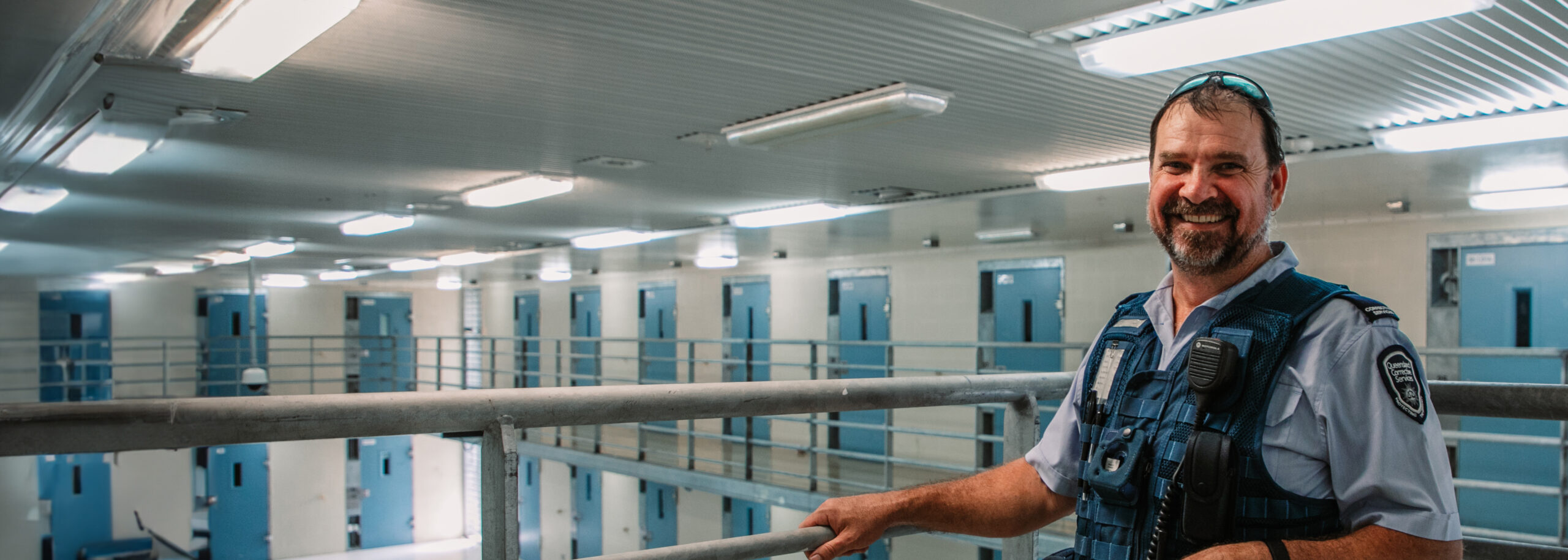

Title: Search - Prisoners and Corrective Services Facilities
Category: Custodial Operations - Standard Operating Procedures
Version: 01
Implement Date: 11 April 2012
Application: Custodial Operations
Availability: Public
Authority
Appendices and Forms
Associated Custodial Operations Standard Operating Procedures
Local Procedures
QCSA Training Manual
Agency Procedures
Policies
Review Date: October 2013
Ownership: Custodial Operations
A management and operational process is established that provides for the conduct of searches which contributes to the safety and security of the corrective services facility and the safety of persons within the facility.
Safety & Security - Our Principles
Refer - Safety and Security - Our Principles (in-confidence)
Chief Inspector Healthy Prisons 2007
Refer - Healthy Prisons Handbook
Standard Guidelines for Corrections in Australia
Refer - Standard Guidelines for Corrections in Australia Revised 2004
Corrective Services Act 2006 ss. 33-40, 123, 136, 138-142, 159
Corrective Services Regulations 2006 s 10, 11
Only those searches prescribed by the Corrective Services Act 2006 (CSA) may be conducted by corrective services officers within corrective services facilities.
Body search of a prisoner means a search of the prisoner's body, including an examination of an orifice or cavity of the prisoner's body.
General search of a person means a search-
Personal search of a prisoner means a search in which light pressure is momentarily applied to the prisoner over his or her general clothes without direct contact being made with-
Scanning search means a search of a person by electronic or other means that does not require a person to remove his or her general clothes or to be touched by another person.
Examples of a scanning search-
that can be passed over the person
to pass
substance that is a prohibited thing
Refer - CSA - Schedule 4
Removal of clothing search, refer - CSA s.38
When conducting a search, a corrective services officer must ensure that-
Personal searches of prisoners may be conducted at any time to ensure the security and good order of the corrective services facility and the safety of persons in the facility. Refer - CSA ss. 33-40
The chief executive or delegate may order the personal searching of prisoners whenever they leave a part of a corrective services facility and where prisoners may have access to concealable prohibited things eg. a kitchen or workshop.
The personal search of a prisoner must be carried out only by a corrective services officer of the same sex as the prisoner.
When conducting a personal search, the prisoner is to be asked to remove his/her hat, shoes/socks, bags or excess clothing. The removed articles must be searched, item by item, in the following manner-
The searching officer must stand to a side-on position to the prisoner and-
The searching officer is then to repeat the search on the prisoner's other side.
Searches requiring the removal of clothing by prisoners must be conducted-
When a delegated officer exercises a decision under CSA ss. 36 or 37 that a search requiring the removal of clothing is to be conducted, this must be recorded in a register. Refer section 3.6 of this standard operating procedure.
The CSA and CSR are prescriptive in the lawful authority that a corrective services officer must comply with when directing a prisoner/s to undertake a search requiring the removal of clothing. Only practices identified in the CSA and CSR may be implemented when undertaking these searches and historical practices ( eg asking a prisoner to squat or asking a male prisoner to lift his scrotum or asking a female prisoner to lift her breasts), are not authorised under the legislation.
S. 38 CSA prescribes the following method for a search requiring the removal of clothing of a prisoner¾
S. 10 CSR prescribes the following method for a search requiring the removal of clothing of a prisoner
A corrective services officer carrying out a search requiring the removal of clothing may also incorporate the following practices which are in accordance with legislative requirements¾
Refer - CSA s 38; CSR ss. 10, 11
If a recording is made on a video recorder or visual monitoring device of a search under CSR s. 11, the recording must be kept in a secure place and cannot be shown to anyone other than ¾
Refer - CSR s. 11
The chief executive or delegate may authorise a doctor to conduct a body search of a prisoner if the chief executive or delegate reasonably believes-
A nurse must be present during the body search and, if the doctor conducting the body search is not of the same sex as the prisoner, the nurse must be of the same sex.
If the doctor reasonably requires help to conduct the body search, the doctor may ask another person to help. Except in an emergency, the other person requested to help in the body search must be of the same sex as the prisoner.
A doctor may seize anything discovered during the body search if-
The doctor must give a seized thing to a corrective services officer as soon as practicable after seizing it.
Refer - CSA s. 39
The chief executive may require a child accommodated with a female prisoner in a corrective services facility to submit to a general search or scanning search before entering the facility.
A child accommodated with a female prisoner must not be submitted to a personal search or a search requiring the removal of clothing.
A prisoner cell in which a child is accommodated is subject to searching as per this procedure.
Refer - CSA s. 32.
Prior to the occupation of accommodation allocated to a prisoner, that accommodation, where practicable, should be thoroughly searched or inspected for contraband, interference with fixtures and fittings and structural defects.
When searching a prisoner's accommodation the prisoner's personal property and belongings are to be returned, as far as possible, to their original position.
The result of any prisoner accommodation search, including common areas and cells, must be documented in a search register. A minimum of 15 per cent of the total number of cells of a secure facility must be searched each week and recorded in an appropriate register.
The general manager of each corrective services facility must establish a register recording the details of each search carried out at their facility requiring the removal of clothing or body search. Refer - CSA s. 40; CSR s. 11
Details to be recorded on the register must include-
Refer Appendix Example of a Search Register
All articles, substances or things located during a search are to be handled in accordance with the standard operating procedure Preservation of a Crime Scene and Evidence and disposed of in accordance with CSA s.138-142.
If a prohibited thing is located in a prisoner's cell that is occupied solely by that prisoner, or is located on a prisoner, it is deemed evidence that the thing was in the prisoner's possession when it was found.
Refer - CSA s. 123(4) and standard operating procedure - Preservation of a Crime Scene and Evidence.
Trade instructors and custodial correctional officers responsible for industry areas must conduct a daily search of the areas for which they are responsible. Industries' supervisors must ensure that a thorough search of all industry areas is conducted at a minimum of once a month and all searches are recorded in an appropriate register.
A lock-down search refers to those searches conducted while all prisoners-
are locked in their accommodation.
The general manager of a corrective services facility must ensure that a program of lock-down searches is established for each 12 month period. Searches may be conducted either as a whole-of-facility search or as a section-by-section search. All areas of all corrective services facilities are to be subject to a lock-down search at a minimum of twice per year.
Targeted searches are for the specific purpose of acting on intelligence advice or incident analysis trends and patterns that impact on the security and good order of the correctional facility, which are for the specific purpose of locating drugs, contraband and intelligence gathering. Targeted searching can be conducted as an immediate response or integrated into the lock-down search plan referred to in section 9.2. Targeted searches are to be of a single purpose focus and conducted separately to all other searches. Targeted searches should focus on¾
Targeted searching is to then be recorded in a register designated specifically for this purpose.
The general manager of the facility must develop and implement a process that ensures visits areas, including visitor lockers and all areas that are accessible to visitors, are routinely searched. An incident report must be completed if a prohibited thing, or a thing which poses a risk to the safety and good order of the facility including on persons within the facility, is found.
Any and all searches conducted on vehicles transiting in and out of the centre must be conducted in accordance with standard operating procedure Control Access to a Facility.
Refer standard operating procedure - Nightshifts and local procedure Princess Alexandra Hospital Secure Unit - Foyer Area (in-confidence)
Endorsed by:
Greg Brown
Acting Deputy Commissioner, Custodial Operations
Approved by:
Marlene Morison
Acting Commissioner
11/04/2011 Version 01