




Title: Parole Boards Administration
Category: Support Services
Version: 09
Implement Date: 25 January 2013
Application: Parole Boards' Secretariat
Availability: Public
Authority
Approved Forms
Appendices and Forms
Procedures
Policies
Ownership: Specialist Operations
To provide for the effective and efficient administrative support to the parole boards.
“corrective services facility” - means a prison or work camp (refer Schedule 4 of the Corrective Services Act 2006 (CSA)).
“parole board” - means either the Queensland Parole Board or a regional board (Central and Northern Queensland Regional Parole Board or the Southern Queensland Regional Parole Board) (refer Schedule 4 of the CSA).
“probation and parole office” - means an office where an offender is subject to a parole order or community based order and may be required to report to a corrective services officer (refer Schedule 4 of the CSA).
“secretary” - means an officer of the department that has been appointed as the secretary of a parole board (refer sections 223 and 237 of the CSA).
Southern Queensland Regional Parole Board - this Board considers matters for prisoners located at:
§ Arthur Gorrie Correctional Centre;
§ Southern Queensland Correctional Centre;
§ Brisbane Correctional Centre;
§ Brisbane Womens Correctional Centre;
§ Numinbah Correctional Centre;
§ Palen Creek Correctional Centre;
§ Wolston Correctional Centre; and
§ Woodford Correctional Centres
and prisoners managed by Probation and Parole offices located in:
§ North Coast Regions;
§ South Coast Regions;
§ Southern Regions; and
§ Brisbane Regions.
Central and Northern Queensland Regional Parole Board - this Board considers matters for prisoners located at;
§ Capricornia Correctional Centre;
§ Lotus Glen Correctional Centre;
§ Townsville Correctional Centre;
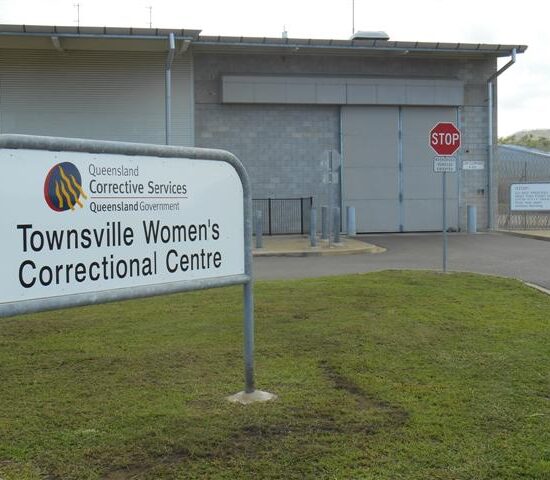
§ Townsville Women's Correctional Centre; and
§ Maryborough Correctional Centres
and prisoners managed by Probation and Parole offices located in:
§ Central Region;
§ Northern Region; and
§ Far Northern Region.
A parole board file must be stored securely at the Parole Boards' Secretariat or approved government archives. The parole board file is different from the offender file which is maintained by a corrective services facility or probation and parole office. The parole board file only contains information relevant to parole board matters.
Refer appendix - Parole Boards Secretariat - Operational Guidelines (section 2.1)
A case history contains all documentation considered by the parole board for a specific case. Each parole board member is provided with a case history, hardcopy or electronic, for all matters scheduled to a specific meeting.
Refer appendix - Parole Boards Secretariat - Operational Guidelines (section 2.2)
Refer appendix - Parole Boards Secretariat - Operational Guidelines (section 3.2)
Refer procedure - Appearance before a Parole Board
Refer appendix - Parole Boards Secretariat - Operational Guidelines (section 3.3)
The Agenda details all cases to be considered by the Board at a meeting.
The Queensland Parole Board must advise the Attorney-General in writing of all applications for parole received for prisoner's sentenced to Her Majesty's Pleasure. The Queensland Parole Board will request from the Attorney General advice regarding the prisoner's suitability for release on a parole order.
The Attorney-General must also be provided with a copy of the offender's case history.
The Queensland Parole Board will consider the matter further upon receipt of the Attorney-General's response regarding the application.
Refer section 19 of this procedure and the Criminal Law Amendment Act 1945 Part 3A (18D)
The secretary must record the parole board decisions on IOMS in real time during the meeting. The parole board will confirm each minute during the parole board meeting.
When an offender or agent appears before the parole board, where possible, and unless authorised by the President of the Parole Boards, the proceedings must be electronically recorded.
The President/Deputy President of the parole boards is responsible for checking each offender's parole eligibility date and communicating the information to the parole board.
In the case of a matter requiring the urgent attention of a parole board the secretary must-
It is the responsibility of the President/Deputy President to brief all members attending the BOOST of the background and merits of each case considered.
During the BOOST, the secretary must-
All correspondence generated by the Parole Boards' Secretariat must go through the approved checking process.
Refer appendix - Parole Boards Secretariat - Operational Guidelines (section 5.3)
Refer administrative form - Parole Boards Secretariat - Correspondence Checklist
Correspondence arising from a parole board meeting must be finalised within 10 working days of the meeting.
Refer appendix - Parole Boards Secretariat - Operational Guidelines (section 6.8)
The parole board may decide to request a report from a person outside of Queensland Corrective Services, to obtain additional information it considers necessary to make a decision, for example a psychiatric or psychological report. Refer CSA s. 193(2).
Where the author is required to access medical records, the offender will be requested to sign a Queensland Health consent form. The consent form must be completed prior to engagement of the report writer.
Refer appendix - Parole Boards Secretariat - Operational Guidelines (section 5.1 and 5.2)
It is the responsibility of the secretary to inform all relevant parties of the parole board's decision.
Relevant parties include the-
The following practice must be observed-
For any parole board decisions that require action within the next business day, the secretary will immediately telephone the Sentence Management Services unit at the relevant correctional centre and/or supervising Probation and Parole District Office to advise of the outcome. When the outcome document has been attached to IOMS the appropriate corrective services officer responsible for the management of the prisoner will be notified.
The approved forms and notification letters must be used to inform the relevant parties (as listed in section 15.1 of this procedure) of the parole board's decision to approve a parole order or an exceptional circumstances parole order. The secretary must issue-
If a parole board cancels or suspends a parole order the secretary must issue-
If a parole board suspends or cancels a parole order and the offender has not yet been returned to custody a Form 39 - Warrant by Board for Arrest and Conveyance of Prisoner to Prison must be issued under the signature of the secretary as soon as possible.
Refer appendix - Parole Boards Secretariat - Operational Guidelines (section 4.4); administrative form - Parole Boards Secretariat - Warrant Checklist, Refer procedure - Warrants, Refer appendix - Warrant Bureau Letter Example (in-confidence)
Upon being notified of the offender's return to custody the delegated officer must ensure that a Form 41 - Information Notice is provided to the prisoner.
Cancellation of the suspension order reinstates the original parole order.
A parole board may decide to cancel a suspension order which was issued by either the parole board or the chief executive.
Following a parole board decision to cancel a suspension order the delegated officer must send a letter (refer appendix - Example - Cancellation of Suspension Order Letter) to all relevant parties advising of the board's decision and include-
If a parole board amends a parole order the delegated officer must issue-
Refer procedures - Transfer of Offenders; and Temporary Travel Interstate/Overseas - All Orders
When the Board decides to grant a prisoner parole subject to Extradition, the parole board must issue a permit to leave the state.
An offender within 28 days of receiving notification that a parole board has made a final decision can request the parole board (as a decision maker) provide a statement of reasons under section 32(2)(b) of the Judicial Review Act 1991 (JRA).
Refer appendix - Parole Boards Secretariat - Operational Guidelines (section 6.3)
In the event an internal or external party (e.g. psychologist) requires information from the Parole Boards' Secretariat the documentation must be released in a manner which is appropriate and compliant with privacy requirements.
Refer appendix - Parole Boards Secretariat - Operational Guidelines (section 6.1); Administrative form - Parole Boards Secretariat - Correspondence and Privacy Checklist
In the case of a preliminary adverse decision being made and to ensure procedural fairness, the Board must provide to the offender a copy of all documents considered by the parole board.
In instances when file documents are to be released to an offender, the President or Deputy President of the parole boards is to provide direction to the secretary if documents, or sections of documents, should not be released.
Refer appendix - Parole Boards Secretariat - Operational Guidelines (section 5.2)
A corrective services officer responsible for the issuing of the parole order must provide the parole board with a report detailing the prisoners circumstances and proposed conditions two weeks prior to the prisoner's release date.
The unexpired component of the offenders' sentence at the time of transfer is to be considered when deciding which parole board is responsible for issuing the parole order.
Refer section 187 of the Corrective Services Act 2006
Correspondence from a parole board to the Minister, Attorney General, chief executive or delegate must be signed by the President or, in the President's absence, the Deputy President.
Refer Criminal Law Amendment Act 1945 Part 3A (18D)
After each meeting the Nominated Public Service Officer on the parole boards is to provide advice to the Commissioner for Corrective Services and other department executives on the outcomes of the parole board meeting and any other matters of interest.
Mark Rallings
Executive Director, Specialist Operations
Marlene Morison
Commissioner
13/08/2010 Version 08 - 21/09/2009 Version 07 - 05/02/2008 Version 06 - 28/08/2006 Version 05 [Parole Boards Administration] - 08/11/2005 Version 04 [Corrections Boards Administration] - 27/01/2004 Version 03 - 01/05/2003 Version 02 [Community Corrections Boards Administration] - 27/06/2002 Version 01