
The Office of the Chief Inspector was established in July 2005 as an added layer of transparency and accountability. The office conducts inspections and reviews at every correctional facility in the state to ensure that correctional facilities are operated safely and efficiently.
These inspections and reviews are based on the concept of a healthy prison which was first set out by the World Health Organisation (WHO). These standards have been adapted to Queensland and the standards are regularly updated. The WHO standards are accepted internationally as the benchmark for custodial environments.
It rests upon four key tests:
| Safety: | Prisoners, even the most vulnerable, are held safely. |
| Respect: | Prisoners are treated with respect for their human dignity. |
| Purposeful activity: | Prisoners are able, and expected, to engage in activity that is likely to benefit them. |
| Resettlement: | Prisoners are prepared for release into the community, and helped to reduce the likelihood of re-offending. |
Correctional centres are measured against these outcomes:
The Healthy Prison Handbook set out a number of detailed standards of performance required of correctional centres and outlines the inspection process employed by the Office of the Chief Inspector in applying the "Healthy Prison Test".
The standards are used to assess each correctional centre's performance against the Test. They are grouped according to specific areas of a centre's operations which contribute in some way towards one or more of the outcomes listed above - for example, 'Arrival in custody', 'Duty of care', 'Good order', 'Activities' and 'Resettlement'.
A ratings system is applied to each area and outcome.
| Rating | Description |
|---|---|
| 1 | Performing well against the inspection criteria. There is no evidence that outcomes for prisoners are being adversely affected in any significant areas. |
| 2 | Performing reasonably well against the inspection criteria. There is some evidence of adverse outcomes for prisoners in only a small number of areas however there are no significant concerns. |
| 3 | Not performing sufficiently well against the inspection criteria. There is evidence that outcomes for prisoners are being adversely affected in many areas or particularly in those areas of greatest importance to the well being of prisoners. Problems / concerns, if left unattended, are likely to become areas of serious concern. |
| 4 | Performing poorly against the inspection criteria. There is evidence that outcomes for prisoners are seriously affected by current practice. There is a failure to ensure even adequate treatment of and / or conditions for prisoners. Immediate remedial action is required. |
The results for each area and outcome are then used to determine a "whole of centre" rating:
| Rating | Description |
|---|---|
| 1 | The centre is performing strongly against the Healthy Prison Test. There is strong performance across all areas / outcomes. Weaknesses, if any, are considered minor. |
| 2 | The centre is performing well against the Healthy Prison Test. There is good performance across most areas / outcomes. There are some weaknesses but either they are not considered significant or if they are significant, they exist only in a small number of areas. |
| 3 | The centre is not performing sufficiently well against the Healthy Prison Test. There is below standard performance across several areas / outcomes and significant weaknesses exist across several key areas. If left unattended, they are likely to become areas of serious concern. |
| 4 | The centre is performing poorly against the Healthy Prison Test. There is poor performance across most areas / outcomes. There are many significant weaknesses. There is inadequate treatment of and / or conditions for prisoners. Immediate remedial action is required. |
Recommendations are given a high, medium or low level of priority.. The implementation of high and medium priority recommendations is monitored by the Office of the Chief Inspector via its program of follow-up inspections.
Low priority recommendations are considered "housekeeping" issues, and the centre's General Manager is responsible for implementing these at the local level.
| Priority | Description | Responsibility |
|---|---|---|
| High | Represents a major risk that if not resolved it will have a significant adverse impact on outcomes for prisoners. Where practicable, requires immediate remedial action. | Directorate/Centre. Chief Inspector to monitor implementation via a follow-up inspection process. |
| Medium | Represents a moderate risk that if not resolved it has the potential to have a significant adverse impact on outcomes for prisoners. Where practicable, requires remedial action in the short to medium term (i.e. within 3-6 months). | Directorate/Centre. Chief Inspector to monitor implementation via a follow-up inspection process. |
| Low | Represents a minor risk that if left unresolved it may have an adverse impact on outcomes for prisoners. Requires remedial action in the longer term (i.e. within 6-12 months) | Centre. General Manager to implement. Not subject to monitoring by the Chief Inspector. |
Copies of full-announced and follow-up inspection conducted by the Office of the Chief Inspector reports have been made available. Some information has been edited because the disclosure of such information may impact on the privacy of an individual, jeopardise the security or order of a corrective facility.
| Correctional Centre |
Full Announced Inspection Report and Year |
Follow-Up Inspection Report and Year |
Next Full Announced Inspection |
|---|---|---|---|
| Arthur Gorrie Correctional Centre | 2012 Full Report (Arthur Gorrie CC) (PDF 665KB) | Due to be conducted in 2013 | n/a |
| Borallon Correctional Centre | 2009 Full Report (Borallon CC) (PDF 562KB) | 2010 - Follow up report (Borallon CC) (PDF 266KB) | 2012 |
| Brisbane Correctional Centre (Men's) | 2009 Full Report (Brisbane CC) (PDF 602KB) | 2010 - Follow up report (BCC) (PDF 262KB) | 2012 |
| Brisbane Women's Correctional Centre | 2010 Full Report (Brisbane Women's CC) (PDF 525KB) | 2011 - Follow up report (BWCC) (PDF 331KB) | 2013 |
| Capricornia Correctional Centre | 2009 Full Report (Capricornia CC) (PDF 470KB) | 2011 - Follow up report (CCC) (PDF 302KB) | 2012 |
| Darling Downs Correctional Centre | 2010 Full Report (Darling Downs CC) (PDF 602KB) | 2011 - Follow up report (DDCC) (PDF 220KB) | 2013 |
| Lotus Glen Correctional Centre | 2011 Full Report (Lotus Glen CC) (PDF 723KB) | n/a | 2014 |
| Maryborough Correctional Centre | 2010 Full Report (Maryborough CC) (PDF 461KB) | 2011 - Follow up report (MCC) (PDF 263KB) | 2013 |
| Numinbah (Men's) Correctional Centre | 2011 Full Report (Numinbah CC - Men's) (PDF 553KB) | n/a | 2014 |
| Numinbah (Women's) | 2011 Full Report (Numinbah CC - Women's) (PDF 510KB) | n/a | 2014 |
| Palen Creek Correctional Centre | 2009 Full Report (Palen Creek CC) (PDF 407KB) | 2010 - Follow up report (PCCC) (PDF 243KB) | 2012 |
| Townsville Correctional Centre (Men's) | 2009 Full Report (Townsville CC - Mens) (PDF 493KB) | 2010 - Follow up report (TCC - Mens) (PDF 331KB) | 2012 |
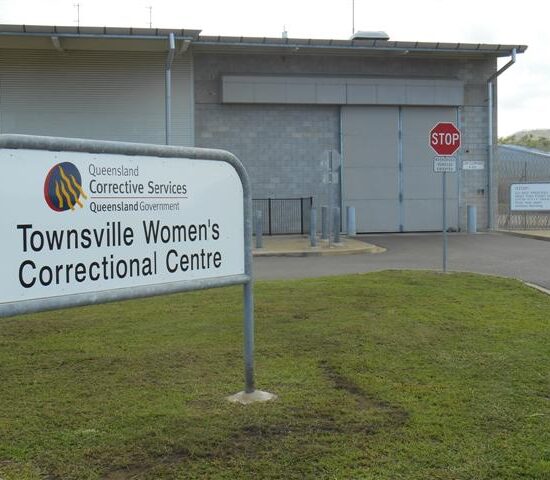
| Townsville Correctional Centre (Women's) | 2010 Full Report (Townsville CC - Women's) (PDF 521KB) | 2010 - Follow up report (TCC - Women's) (PDF 302KB) | 2013 |
| Wolston Correctional Centre | 2009 Full Report (Wolston CC) (PDF 588KB) | 2010 - Follow up report (Wolston CC) (PDF 265KB) | 2012 |
| Woodford Correctional Centre | 2010 Full Report (Woodford CC) (PDF 479KB) | 2011 - Follow up report (Woodford CC) (PDF 245KB) | 2013 |
Last updated: 13 February 2013